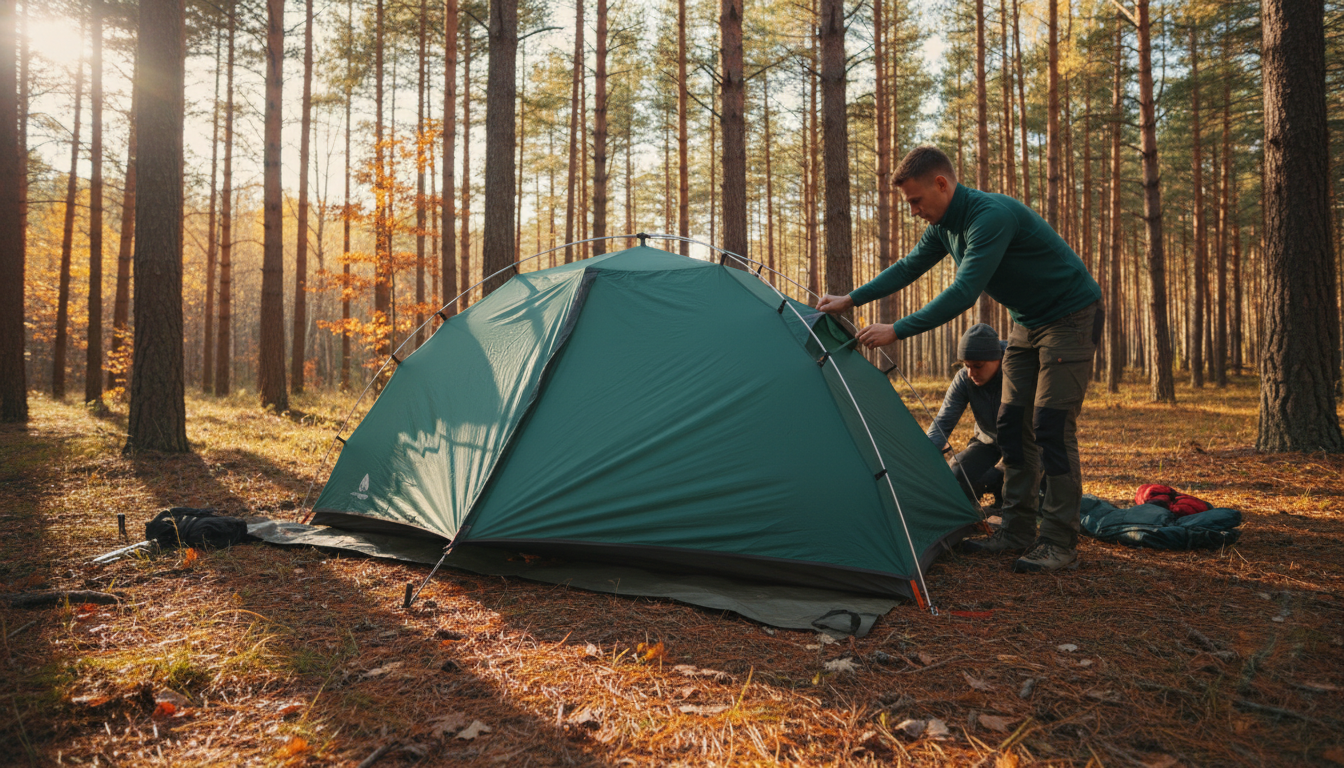
Choosing a tent feels overwhelming until you understand the handful of variables that actually matter. Cut through the spec-sheet noise and focus on these six factors — and you’ll land on the right shelter for your style of camping.
1. Season Rating: Match It to Your Conditions
Most backpackers need a 3-season tent. It handles spring through fall conditions — rain, moderate wind, and the occasional shoulder-season cold snap — without the extra weight of a 4-season mountaineering shelter. If you’re regularly camping in winter or above treeline in sustained wind and snow, a 4-season or convertible design makes sense. If you primarily camp in warm, dry conditions, a 2-season or ultralight tarp setup keeps weight minimal.
2. Capacity: Size Down (But Not Too Far)
A 2-person tent comfortably sleeps one person with gear, or two people who don’t mind being cozy. If you’re camping with a partner and you both have full packs, consider a 3-person tent. Solo backpackers who want room to sit up and spread out a little are often happier in a 2-person design. The Summit Pro 3-Season Tent is designed as a true 2-person shelter with vestibule storage so your gear isn’t crowding your sleeping space.
3. Freestanding vs. Non-Freestanding
Freestanding tents stand on their own poles without stakes — easier to set up, easier to move, and workable on surfaces where staking is hard (rock, sandy soil, snow). Non-freestanding designs like tarps and tunnel tents typically shed wind better and weigh less, but require reliable staking points and some setup practice. For most beginners and general-purpose camping, freestanding is the better starting point.
4. Rainfly Coverage
A full-coverage rainfly that reaches close to the ground is the most weather-resistant option. Partial-coverage or vestibule-only designs save weight and add views, but leave the inner tent walls exposed to blowing rain. Check whether the fly’s hem hangs 2–3 inches above the ground or stakes tight — the latter dramatically improves wind performance.
5. Ventilation Design
A well-ventilated tent reduces condensation, which is often the reason people wake up damp even when it hasn’t rained. Look for mesh inner walls, low vents near the ground, and high vents under the fly — this creates the chimney effect that pulls humid air out. Double-wall construction (separate inner and rainfly) is the standard approach for managing condensation effectively.
6. Weight vs. Durability Trade-off
Lighter fabrics and poles reduce pack weight but also reduce durability. For occasional weekend trips, an ultralight 20D fabric performs well. For extended trips, expedition use, or if you’re hard on gear, a heavier 30D or 40D fabric will outlast lighter alternatives significantly. Pole material matters too — aluminum bends rather than shatters under load and is repairable in the field; carbon fiber saves weight but cracks under impact.
Once you’ve matched these six factors to your typical conditions and the way you camp, the right tent becomes obvious. Browse the Tents category in the Summit Forge shop to see current options.
Leave a Reply