Starting a fire in the field is one of those skills that looks simple until the day it’s cold, wet, and you actually need one. Most people carry a lighter and stop there — which works 90% of the time. The other 10% is where it matters. Here are five methods that work across varying conditions, from the foolproof to the friction-based.
1. Butane Lighter (The Default)
There’s nothing romantic about a BIC, but a cheap butane lighter is reliable, fast, and weighs almost nothing. Keep it in a dry location — inside a ziploc or a breast pocket — because lighters fail in cold and wet conditions if the flint or fuel valve gets damp. A backup is always worth carrying. One lighter in the pack, one in the cook kit, one in the emergency layer — that’s the minimum for serious backcountry trips.
2. Ferro Rod (The Reliable Backup)
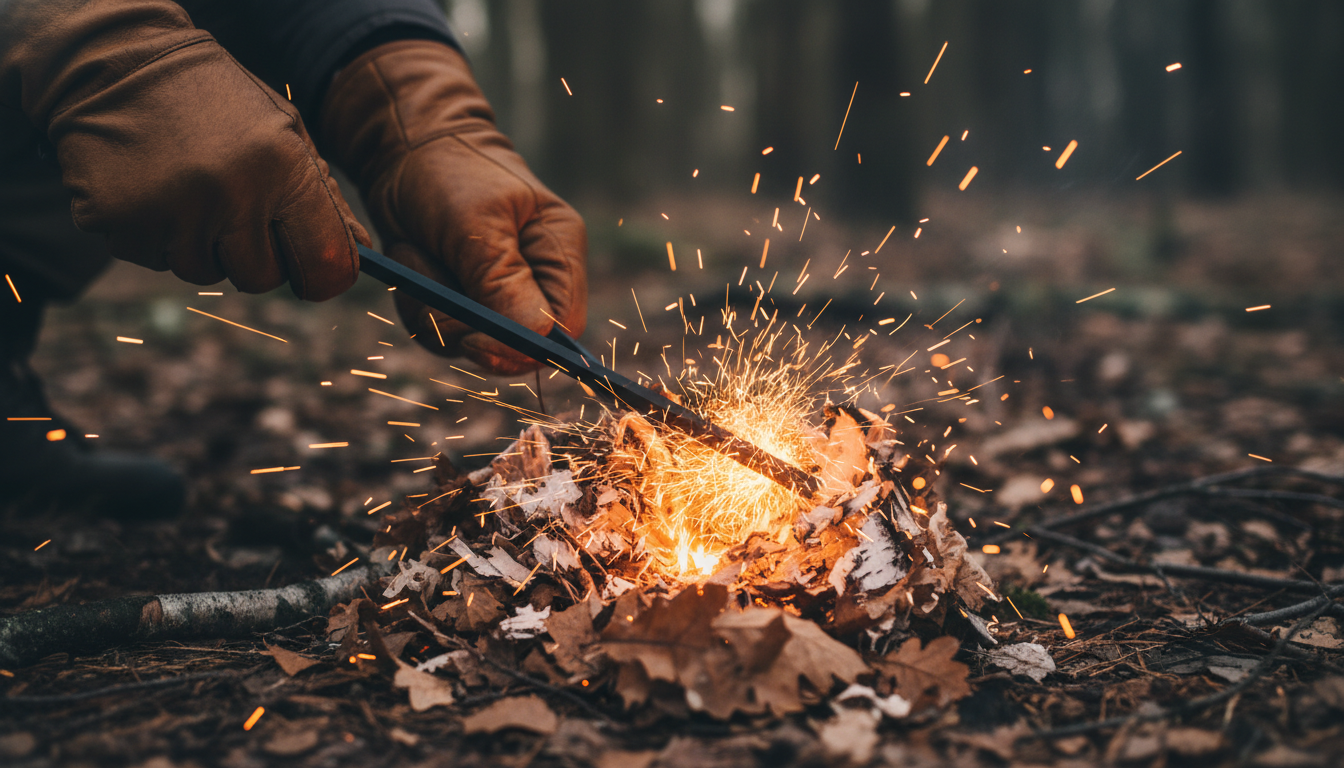
A ferro rod produces sparks at around 3,000°C — hot enough to ignite a well-prepared tinder bundle regardless of humidity. Unlike lighters, ferro rods don’t run out of fuel, don’t malfunction in cold temperatures, and can last for thousands of strikes. The FireStarter Ferro Rod Kit includes a thick-diameter rod and a dedicated striker for consistent spark production. Practice before your trip — technique matters more than force. Short, controlled scrapes work better than long raking strokes that scatter sparks.
3. Waterproof Matches
Waterproof or storm matches are windproof and burn hot for 8–10 seconds — long enough to catch damp tinder. They’re bulkier than a lighter and each one is a single-use item, but they’re essentially failure-proof if the tinder is prepared correctly. Store them in the original container or a dry film canister. A box of 25 weighs under an ounce and represents 25 reliable ignition sources.
4. Magnifying Lens (Solar Ignition)
Works only in direct sunlight with low humidity, which limits its range of use significantly — but in the right conditions it’s elegant and effortless. Concentrate the focal point on a dark, dry tinder like char cloth or powdered dry fungus. Patience is the main requirement; the tinder needs to smolder before you transfer it to a bundle. Not a primary method, but a genuinely useful emergency backup when your other ignition sources are wet.
5. Friction Fire: Bow Drill
The bow drill is the most reliable primitive fire method and a legitimate survival skill. A spindle (typically straight-grained willow, cedar, or mullein) spins in a fireboard of the same or softer wood, generating heat through friction that creates a coal. The coal transfers to a tinder bundle and is blown gently into flame. It takes practice — expect to fail the first ten times. Once you’ve made fire this way successfully, everything else feels easy. It’s also a completely waterlogged worst-case scenario method: as long as you can find dry wood somewhere (inside standing dead wood, under bark) and have the body heat to dry it out, you can make fire.
Always Prepare Your Tinder First
The method matters far less than the tinder. No ignition source will start a fire in green wood or wet material. Collect dry grasses, birch bark (highly flammable even when slightly damp due to natural oils), pine resin, dry leaves, or fatwood shavings before you try to light anything. Build your tinder bundle, then your kindling structure, then reach for the ignition. The right tinder makes every method easier. The wrong tinder makes every method fail.
Leave a Reply