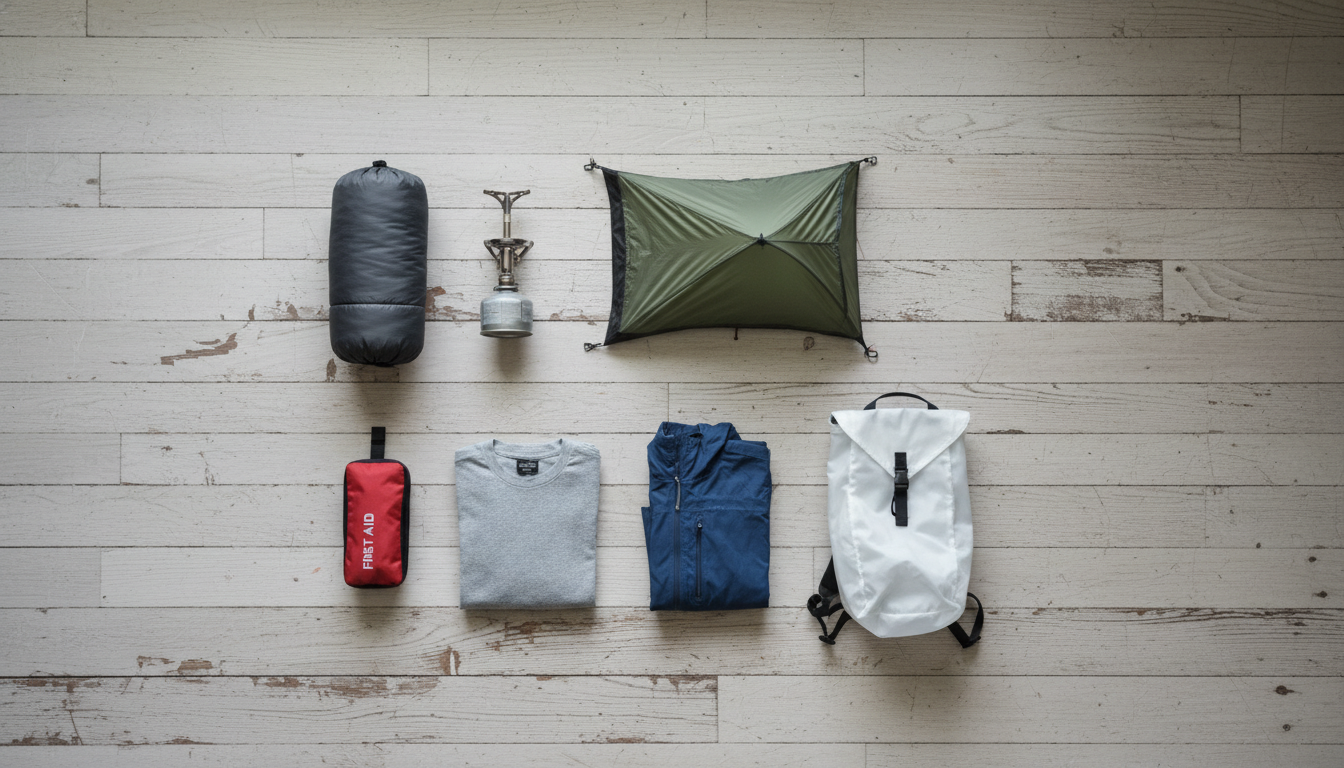
Every backpacker has a moment where they look at what they just carried for three days and ask the question: did I actually need all of that? Ultralight backpacking isn’t about suffering — it’s about cutting what doesn’t earn its place so that the miles become easier and the days get longer. Here’s how to start.
The Big Three First
Shelter, sleep system, and pack together make up your “Big Three” — the heaviest items in almost every kit. Shaving weight here compounds across every mile you walk. A quality lightweight tent like the Summit Pro 3-Season Tent at 4.2 lbs is a solid start. Once you’ve optimized these three, the rest of the kit falls into place naturally.
Do a Gear Audit Before You Pack
Dump everything on the floor and assign each item to one of three piles: Always Needed, Sometimes Needed, and Just In Case. The “Just In Case” pile is usually the heaviest. For weekend trips in familiar terrain, almost everything in that pile can stay home. Ask yourself: what’s the actual consequence if I don’t bring this? If the answer is “mild inconvenience,” leave it.
Dual-Purpose Items Win
A TrailMug Insulated Bottle serves as a water bottle and hot drink container. A rain jacket doubles as a wind shell. Your pack’s hip belt pockets replace a separate hip pack. The goal isn’t to own less gear — it’s to own gear that does more than one job well.
Consumables Are Free Weight
Unlike gear, consumables get lighter as the trip goes on. Pack food that’s calorie-dense relative to its weight — nuts, nut butters, hard cheeses, dehydrated meals, and quality energy bars. Target 100+ calories per ounce. This isn’t about eating badly; some of the best backcountry meals are also the lightest.
Water Strategy Beats Carrying Water
Carrying two liters of water at all times is a kilogram you don’t need if you know where the sources are. Study your route, identify reliable water sources, and carry only what you need to reach the next one. A lightweight gravity filter like the AquaPure Gravity Water Filter weighs a few ounces and processes water while you set up camp.
Weigh Before You Buy
Get a small digital kitchen scale — they’re cheap and they change how you think about gear. Weigh everything. You’ll often discover that two items you assumed were similar weight have a 30% difference, and that difference adds up fast across a full kit.
Light Doesn’t Mean Cheap
The lightest gear is often more expensive, but you don’t have to replace everything at once. Start with what you carry most miles and feels heaviest — usually the pack and sleep system. Upgrade incrementally and buy quality once rather than mediocre twice.
Going light is a mindset shift as much as a gear upgrade. Once you’ve done a 15-mile day with a 20-lb pack and felt how different it is from a 35-lb pack, you won’t go back.
Leave a Reply